

Whether you spend your nights chaining matches on Fall Guys or scrolling through Instagram in bed, you have probably noticed it: light can be harmful to your eyes, but also to your sleep. We recently discussed this in our guide on how to sleep better. Even a simple nightlight can have significant consequences. What are the mechanisms at play? Do all light sources and colors have the same impact on sleep? In this article, we shed some light (yes, that was an easy one) on the subject!
In this article:
-
💡 The effects of light on sleep
-
👎 When light prevents you from sleeping
-
👍 When light promotes falling asleep
-
😴 How to get quality sleep back
The effects of light on sleep

The different light sources that can disrupt your sleep
Before talking about how light, its type, and its intensity can affect your sleep, let's remember that there isn't just one, but several types of light coming from different sources:
-
☀️ Daylight, composed of a light spectrum containing several colors (wavelengths) with very different effects depending on the time of day,
-
🏘 Public artificial lighting,
-
💡 Indoor artificial lighting, particularly LEDs, a source of artificial blue light,
-
📱 Screen light (computer, phone, tablet, television), also mostly composed of blue light.
Whether we like it or not, we are constantly exposed to light. With this established, we can now set out to understand the real impact of light.
Light regulates (and disrupts) the wake/sleep rhythm
The crucial point to understand is that your body follows a natural rhythm influenced by light on a daily basis: this is the circadian rhythm.
👉 Maintaining this day/night rhythm is the key to restorative sleep and good health.
How does it work in detail?
To summarize one of the main phenomena, light captured by our eyes via the photosensitive cells in the retina triggers the production of hormones based on the intensity and wavelength of the light:
-
🌤 Morning light, richer in blue light, stimulates wakefulness by decreasing the production of melatonin, the famous sleep-inducing hormone, and promotes the production of cortisol to prepare you for a day full of activities
-
🌅 Conversely, in the evening, the drop in light levels sends a signal to our brain that it is time to rest, via the pineal gland, which produces melatonin. The amount of hormone therefore drops to make it easier to fall asleep.
The problem arises when we continue to be exposed to light once the sun has set, disrupting the circadian rhythm and therefore melatonin secretion. Not getting enough exposure to natural light during the day combined with overexposure to artificial light at night leads to sleep disturbances.
When light prevents you from sleeping

As you will have understood, blue light is the big boss to beat to get better sleep: because it is more intense, it increases the time it takes to fall asleep and impacts the quality of your nights by notably inhibiting the production of melatonin.
But beyond exposure to blue light that messes up the circadian rhythm, know that the slightest source of light at night deactivates melatonin secretion.
🛋 Basically, if you try to fall asleep with your bedside lamp on after an episode of The Last Of Us, it's not (just) the fear of the infected that keeps you awake!
The slightest diode in your bedroom, public lighting that is a bit too present in front of your window, or even your smartphone screen lighting up at the slightest notification will have a negative role on your ability to fall asleep and on the quality of your sleep.
👉 To give you an idea: the glow of a single candle can cut your melatonin levels in half. The light from an e-reader can delay your falling asleep by more than 20 minutes! (see the Monash University study or an interesting study by the CNRS on this subject which goes into detail on the question).

It is therefore essential to go to bed and sleep in complete darkness (if you only remember one thing from this article, it must be this piece of advice!)
💡 Good to know: light and sleep cycles
Do you perhaps think your nights are one long, calm river? Think again! In reality, your sleep is driven by several successive cycles, with very different phases.
During the so-called "light sleep" phase, you can be awakened by the slightest stimulation. In order for the cycles to follow one another and for your night not to be interrupted, it is important to establish an environment conducive to sleep, with as little disruption as possible.
🕯 Note that some people are more sensitive to light than others: while some sleep more easily in a bright environment, others will be bothered by the mere glow of an electronic device's standby light.
When light promotes falling asleep

As we said above, light is an essential component of the circadian rhythm and it is essential for our body. And living in a dark cave won't solve your sleep problems, quite the contrary!
During the day, it is essential to expose yourself to natural light to find a healthier lifestyle rhythm.
- 🌅 2 to 10 minutes of sun at sunrise
- ☀️ 30 to 40 minutes of natural light in the morning
It is proven, daylight plays a role in our mood and morale: seasonal depression linked to the lack of light in winter is now a recognized subject.
This is where light therapy can come into play (even if it doesn't replace natural light, it's better than nothing in winter): by reproducing natural light and focusing on very specific wavelengths, we can induce certain benefits for our body.
- 🌄 Dawn simulators aim to wake you up naturally by reproducing the gradual light of the sunrise
- 🔴 Sunset simulators based on the effects of red light (or rather on the act of lowering light while still being able to see) are therefore becoming more and more widespread.
💡 Good to know: blue light is also used in phototherapy, to improve concentration or fight acne, for example!
How to get quality sleep back
👉 Now that you know everything about the influence of light on sleep, here are our tips to get back to restorative sleep.
Increase your time of exposure to natural light
Reset your body to a natural circadian rhythm by regularly exposing yourself to daylight: stop playing the vampire hiding in a mansion and go out to get some air 🧛
In addition to the benefits on your sleep, you will be able to notice significant positive effects on your physical health and well-being.
Reduce your exposure to light and especially blue light at the end of the day
Blue light increases the time needed to fall asleep and should be banned from your evenings. In other words, stop screens at least 3 hours before going to bed and favor warm lighting to prepare your body for the sunset.
And if you are too attached to your PC gaming evenings, we recommend that you protect yourself with our range of anti-blue light gaming glasses, which are effective and stylish.

💡 Obviously, let's remember that reducing your exposure to blue light will also have a beneficial influence on your health: reduction of eye strain, dry eye syndrome, and other cognitive and hormonal disorders linked to overexposure to screens.
Lights out mandatory
Repeat with us: for quality sleep, it is best to sleep in complete darkness!
Our advice is therefore to limit light sources as much as possible to ensure restorative sleep: no electronic devices charging, no mobile phones on the bedside table (many studies actually warn about the risks of sleeping near your turned-on phone), or other light disturbances!
For those who have a streetlamp next to their bedroom, we recommend choosing blackout curtains and/or a sleep mask to sleep in darkness.
Opt for a regular schedule
Give your internal clock a boost by getting back to a healthier rhythm and regular sleep hours.
⏰ Set a bedtime and try to stick to it as much as possible. In this way, your body will acquire mechanisms and habits by aligning with this rhythm, and you will find the path to sleep more easily.
Limit stress
We are not telling you anything new if we tell you that stress and anxiety are among the most widespread causes of sleep disorders. Difficulty falling asleep, interrupted sleep, insomnia... there are many impacts of stress on our nights!
Knowing this, we quickly understand the importance of relaxation for sleeping well. A path to finding more serene sleep: test one of the many types of meditation and find the one that suits you best 🙏
Adopt a healthy lifestyle
There is no secret, if you want to sleep well, you have to take care of yourself on a daily basis.
-
🍽 Space out dinner and bedtime by at least 3 hours to avoid digestion problems that could hinder your sleep.
-
🥗 In the evening, choose an easily digestible meal: light, balanced, not too spicy, and not too fatty.
-
🚰 Drink water during the day regularly: hydration, elimination of toxins. However, we advise you to gradually decrease in the evening at the risk of having to get up several times a night.
-
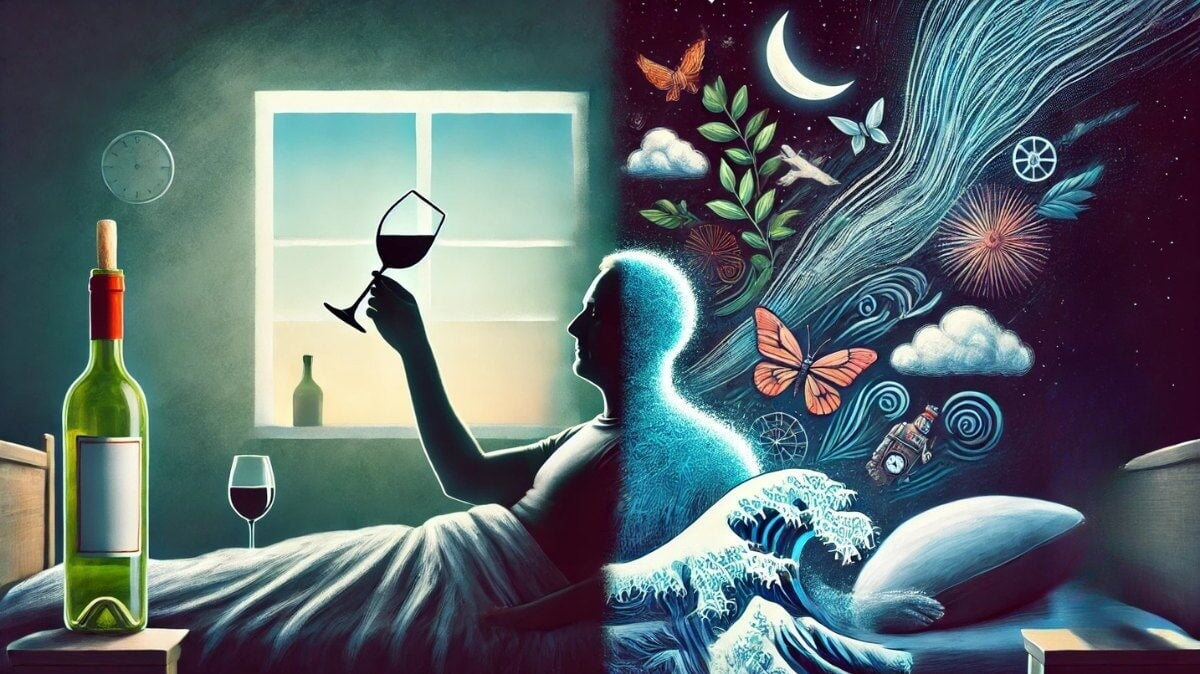
🍹 Limit alcohol in the evening: even if you feel like you will sleep better, in reality, alcohol consumption increases the number of nightly awakenings and disrupts REM sleep.
-
☕️ Decrease your coffee consumption: caffeine, in addition to being a stimulant whose effects can last several hours, has a harmful impact on sleep cycles. In practice, it is better to consume caffeinated drinks early in the day rather than in the afternoon.
-
🏃 Practice regular physical activity: not only does sport help fight stress, but it also has a positive influence on the deep sleep phase.
The final word: light and sleep
🧐 How does light affect our sleep? By disrupting the circadian rhythm, light hinders falling asleep and sleep quality.
🖥 Does blue light disrupt sleep? Prolonged exposure to blue light from screens directly influences the regulation of melatonin secretion: you will feel more difficulty falling asleep... and staying asleep! We therefore advise you to protect yourself by reducing your screen time or by getting anti-blue light glasses.
Complete darkness?
Well yes, it is advised. The slightest light stimulation is enough to turn off melatonin production and thus make your body believe that the night is over!
PS: Note that the effects of light go much further than a bad night's sleep. By reducing our restorative sleep, the long-term consequences can be serious: mood disorders, diabetes, obesity... The list is long. So remember to protect yourself now.