

Tired of not getting a wink of sleep at night because your neighbor is vacuuming, there’s traffic on your street, or your partner is snoring?
The solution for you might be a noise-cancelling headband!
Usefulness, different types of headsets, bonus tips: we explain everything about this accessory that could save your nights!
⚠️ One of the links in this article goes to Amazon. It’s not monetized: Jeff Bezos won’t show up at our door with a check – we just want to be helpful.
The Best Noise-Cancelling Headphones for Sleeping
Before looking at the models, choose your type of headset according to your profile:
- If you sleep on your side or move around a lot: go for a thin and flexible headband, comfortable and that doesn’t interfere with your movements.
- If you want a good comfort/noise isolation balance: choose earbuds specially designed for sleeping, thin and discreet.
- If your environment is very noisy (traffic, neighbors, snoring): choose a model with active noise cancellation (ANC) for maximum silence.
| Model | ANC | Battery Life | Price | |
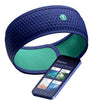 |
Hoomband Headband | No | 10 h | From €67 |
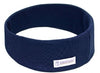 |
SleepPhones Wireless Headband | No | 24 h | From €149 |
 |
HoomBand Ultimate Wireless Sleep Headband | No | 10 h | From €97 |
 |
Anker Soundcore A20 In-Ear Earbuds | No (passive reduction) | 14 h (80 with case) | From €150 |
 |
QuietOn 4 Sleep Earbuds | Yes (sleep ANC) | 28 h | From €259 |
Hoomband Headband (from €67)
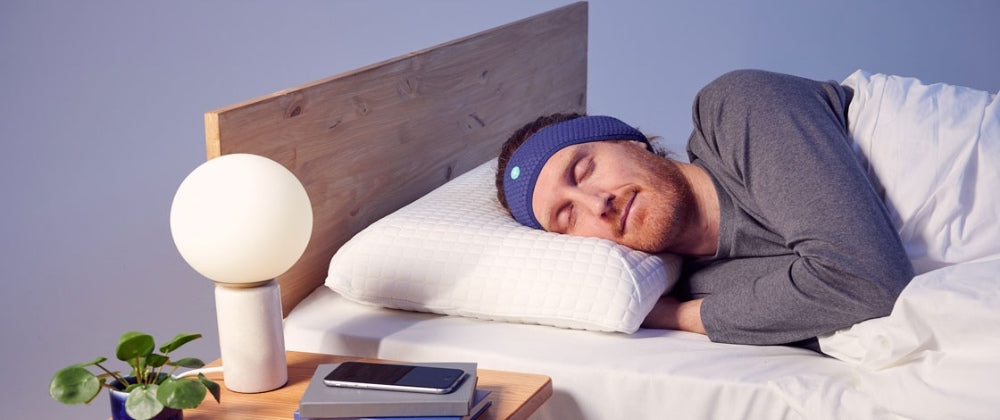
This is a good value for money with this connected headband designed for people who want to relax before sleeping while reducing surrounding noise, as long as it’s not too loud.
The fabric is elastic and durable, the earbuds are flat and adjustable, the battery lasts 10 hours, and you can connect your music and podcast apps to listen to white noise or your favorite relaxation playlist.
SleepPhones Wireless Headband (from €149)
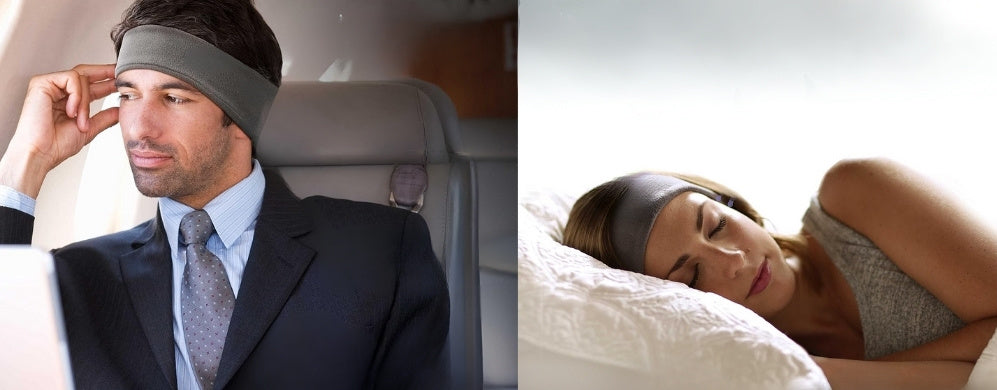
A bit more premium, this headband has the advantage of being washable. With 24 hours of battery life, you can sleep soundly without noise for several nights!
This wireless connected headband is a good solution if you want peaceful sleep but also want to use it during the day.
HoomBand Ultimate Wireless Sleep Headband (from €97)

The HoomBand Ultimate takes the audio sleep headband concept further by adding a 100% blackout sleep mask for total immersion.
This model blocks light as well as isolating you from noise.
Like other headbands, you can sleep on your side with it, and it lasts all night with 10 hours of battery life (so remember to recharge it each morning).
Anker Soundcore A20 In-Ear Earbuds (from €149.99)

If in-ear earbuds (which fit inside your ears) don’t bother you and you want high-end sound protection, the Anker Soundcore A20 is for you. No ANC here either, but passive noise reduction is complemented by a noise masking function (white noise, relaxing sounds…).
These passive earbuds let you sleep comfortably even on your side. With the dedicated app, you can choose from multiple white noise or relaxing sounds to drift off peacefully.
Battery life is around 14 hours, and up to 80 hours with the charging case. With a price around €149, it’s an excellent balance between comfort and noise reduction!
QuietOn 4 Sleep Earbuds (from €259)

Here we have active in-ear earbuds using high-performance noise cancellation technology (ANC).
This model has no Bluetooth, but provides real isolation so you can sleep without any sound disturbances! Add 28 hours of battery life, allowing you to go several nights without charging – perfect for those who want to restore quality sleep.
💡 Note: Construction headphones (over-ear or supra-aural, not the ones protecting the head!) are sometimes recommended as sleep noise-cancelling headphones. Personally, we don’t find them very comfortable, but feel free to try if you want!
Why choose noise-cancelling headphones for your sleep?

There are many reasons why you might want to switch to headphones for sleeping:
- 👌 An alternative to earplugs: because yes, disposable earplugs are not very eco-friendly or necessarily economical. And if you can’t stand things in your ear canal, noise-cancelling headphones are more comfortable.
- 🎧 Noise-cancelling headphones or headbands are not only useful for falling asleep, but also for staying asleep! Noise can cause sleep interruptions and disrupt your sleep cycles.
- ♻️ Versatile use: depending on the type of hearing protection you choose, you can also use it like regular earbuds, or as a relaxation aid. This non-medical device can help you sleep, isolate yourself when you need calm, or work in noisy environments. Some models with earbuds can play your choice of sounds: music, meditation (guided or not), white noise, etc.
- 👍 A wide range of models for all budgets: from headbands to full isolating headphones, there’s definitely a type of hearing protection for you!
💡 Note: Night earbuds can also be used during the day (at work, in transit, for watching a series incognito), but the reverse isn’t recommended. You’ll quickly notice that a regular headphone isn’t designed to be worn in bed like these sleep-specific devices!
Different Types of Noise-Cancelling Headphones
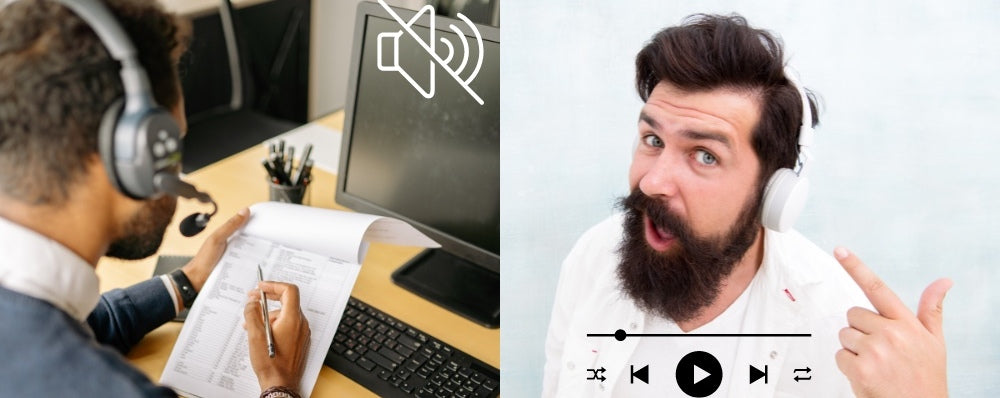
If you want to invest in noise-cancelling headphones to improve your sleep quality and block out external sounds, it’s time to talk about the different types available on the market to help you make sense of it all.
Passive or Active Headphones?
The first big distinction to make is this one. There are two main categories of noise-cancelling headphones:
- 🔉 Active headphones or audio noise-cancelling headphones: these models feature a microphone that captures, filters, and reproduces external sounds while blocking out disturbances. Basically, you’ll hear your partner whispering but not their snoring or your upstairs neighbor’s drilling (yes, been there). Similarly, if they have good sound isolation, you can listen to music without disturbing those around you while reducing ambient noise. This is the most versatile type of headphone and can be the most economical in the long run.
- 🔇 Passive headphones: This type is mainly for sound protection. You can’t listen to music, so they’re less versatile. Generally, passive headphones offer less sound filtration than active ones.
Which Headphone Shape?
Here too, you have several options: noise-cancelling headbands, on-ear (supra-aural) headphones, or over-ear (circumaural) headphones. Let’s explain!
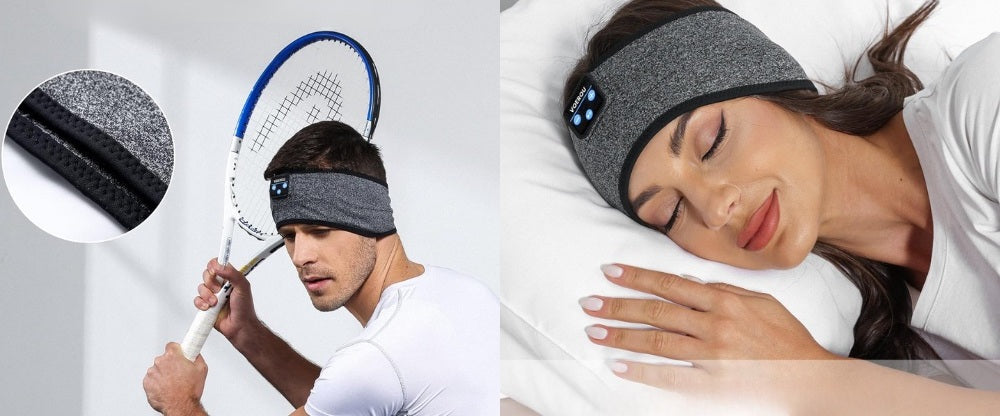
- Noise-cancelling headband: the most affordable option if you want to sleep without being disturbed by noise. Comfortable and reusable for other activities, it’s ideal for sleeping on your stomach or side since it won’t bother you. Most headbands come with Bluetooth-connected earbuds to play white noise, music, or meditation tracks. Main downside: it reduces external noise but does not fully isolate you.
- On-ear (supra-aural) headphones: as the name suggests, these sit on your ears, making them a lighter option. The drawback is they may shift more during sleep, potentially causing discomfort.
- Over-ear (circumaural) headphones: these fully encase your ears rather than just resting on them, making a big difference. They are usually more comfortable and provide better sound isolation along with high audio quality.
How to Choose the Right Sleep Headphones
Ideally, we recommend testing the comfort and lightness of the models you’re interested in. Headphone type, comfort, and noise isolation are key criteria, but not the only ones!
➡️ Headphone type: as mentioned above, the first criterion is the type of headphone: a sleep headband is ideal in a quiet environment, passive headphones provide excellent isolation, and active headphones offer extra features and more reuse potential.
➡️ Shape and comfort: headband or sleep mask, over-ear or on-ear, not all designs are equal. Prefer products with flat earbuds so they rest comfortably on a pillow. Also, pay attention to materials for both comfort and optimal noise protection. Some headphones have removable washable cushions, memory foam, anti-sweat, gel, or even fleece covers for cold sleepers.
➡️ Features: does your chosen model have noise cancellation? Can it be easily turned off? Maybe Bluetooth speakers for relaxing sounds to help you fall asleep?
➡️ Noise isolation level: choose your headphone according to your environment. Compare the noise reduction rating (in decibels), considering high, mid, and low frequencies for details.
➡️ Battery life, charging time, and charger type: three essential factors if you want to use your headphones all night (or during the day) without daily recharging.
➡️ Budget: noise-cancelling headphones range from €30 to €200, and higher for premium models.
As you can see, it all depends on usage, how much you want to spend, and which features matter most to you in everyday life.
Our Bonus Tips for Better Sleep

We can’t say it enough: sleep is essential! To sleep well and improve sleep quality, here are some essential tips:
- 🔵 Limit exposure to blue light: watch out for blue light from screens and LEDs, which disrupts your circadian rhythm, especially in the evening! Take breaks away from screens, equip yourself with good blue light glasses (with or without prescription), and banish your smartphone from your bedroom (yes, we see you scrolling at night in the dark).

- 🕰️ Keep a consistent schedule: if possible, maintain fixed bedtime and wake-up times. Like kids, give yourself a regular sleep window to train your body’s natural rhythm.
- 🙏 A calm and restful environment: think of your bedroom as your sleep sanctuary, not an extension of your gaming room! Avoid harsh lighting, create a relaxing atmosphere with warm, dim lights, and choose quality bedding to minimize stimuli and make falling asleep easier.

- 🧘♂️ Good lifestyle habits for better sleep: a good mattress and pillow aren’t enough; you also need to limit anything that harms your sleep quality! To avoid insomnia when stressed, try meditation or yoga. Likewise, avoid heavy evening meals, limit alcohol and caffeine, and stay physically active (not just for show, it really works!).
- If you insist on using earplugs, try silicone ones that are washable and reusable. Better for the planet and your wallet, some can even be custom-made to perfectly fit your ears.
- Of course, if you suffer from sleep disorders and have already tried all the tips above, don’t hesitate to consult a professional.
💡 Pssst: to learn everything about this topic and finally sleep better, check out all our sleep articles on the blog!
Final Word: A Noise-Cancelling Headset for Peaceful Sleep (or Almost!)
- What are the different types of noise-cancelling headphones? In the auditory protection family, you have headbands with built-in earbuds for light protection and comfortable wear, passive headphones offering 20–37 decibels of noise reduction, and active headphones that are reusable like classic headphones while still effectively isolating you from noise (some models can block up to 100 decibels!).
- Which noise-cancelling headset to choose? It depends on your use: if you want it for sleeping on public transport, working in a busy office or coworking space, or sleeping next to a highway, go for a Bluetooth sleep headset with noise cancellation. If you want to play soft music to relax before bed and don’t share your bed with a Snorlax, a soft, comfortable sleep headband is a good choice—cheaper than rigid models.
- If we had to pick three, we’d probably recommend the SleepPhones Wireless headband, the Anker Soundcore Sleep A20 passive earbuds, or the QuietOn 4 Sleep ANC earbuds. But as always, the best approach is to test and compare to be sure—your sleep is at stake!
- Of course, good protection isn’t everything; there are simple tricks to sleep better. Check out our complete guide to better sleep for a restorative night!