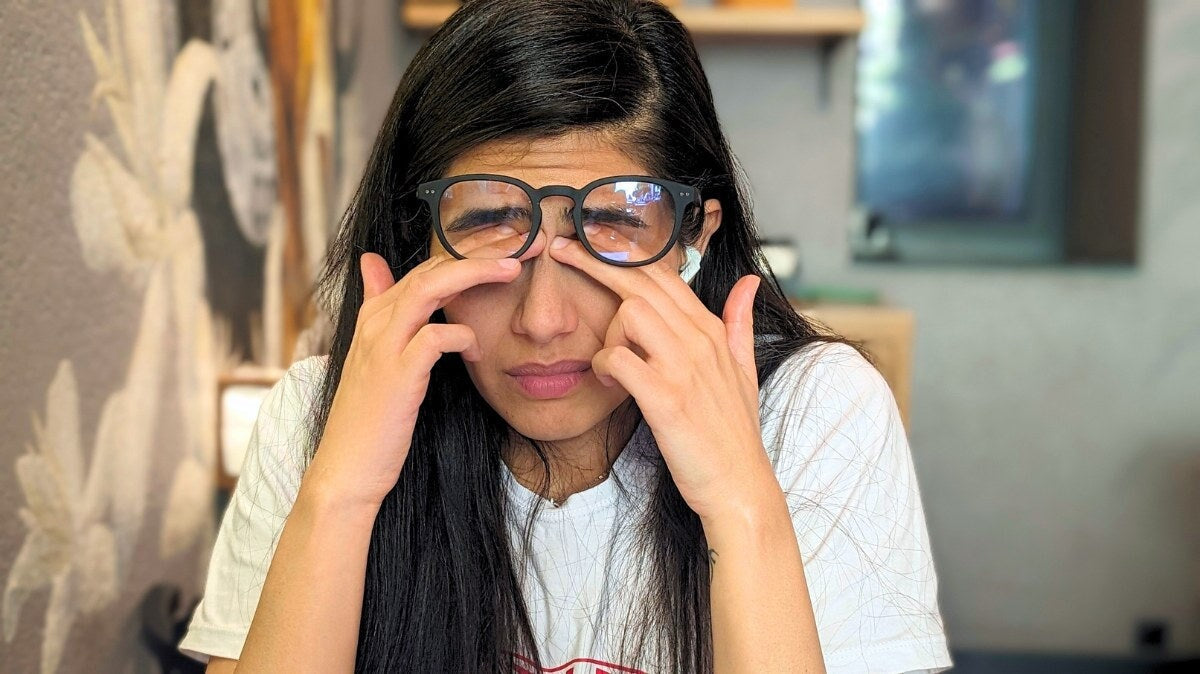


Back from a day in the sun and your eyes are red and can't handle the light tonight? Good news: you haven't turned into a vampire. Bad news: you might have just discovered something that isn't much fun: sunburn of the eye (or photokeratitis, or actinic keratitis).
And yes, you thought protecting your skin was enough? Big mistake! You probably didn't know it, but your eyes can also get sunburned. We'll tell you how to recognize a sunburn of the eye, soothe it quickly, and, most importantly, avoid it!
Photokeratitis: sunburn of the eyes

You’ve likely experienced sunburn on your shoulders, back, cheeks, or maybe even your feet or scalp… but what about your eyes? Yes, having a sunburn of the eye is real, yes, it hurts, and yes, it’s more common than you’d think.
So, what is photokeratitis (also called actinic keratitis or solar keratitis)? Basically, it is a burn of the cornea caused by intense and/or prolonged sun exposure.
How do you get a sunburn in your eye?

The culprits behind all this: the famous ultraviolet rays that pass through your cornea with ease if you don't equip yourself with good anti-UV sunglasses.
Indeed, when you expose yourself to UV rays without proper sun protection, they enter your eyes directly; the cornea, that thin transparent layer on your eye, is on the front line. If the exposure is too intense or lasts too long, you risk burns: that is photokeratitis.
This phenomenon is amplified in very sunny situations with high reflection: the seaside, the mountains… Because yes, you can also get a sunburn of the eyes on the ski slopes! This is a well-known situation for mountain rescue teams: UV rays are more powerful at high altitudes, and snow can reflect up to 80% of solar rays. So, a word of advice: effectively protect your peepers by wearing good sunglasses at the beach and for winter sports.
Symptoms of photokeratitis: tell-tale signs

If you've just spent several hours basking in the sun without proper glasses, it's possible your eyes are in distress and sending you an SOS like:
- 🔴 Red eyes
- 🔥 Burning sensation, tingling, dry eyes, the feeling of having sand under your eyelid
- 💡 Increased sensitivity to light (photophobia)
- 😵💫 Blurred vision
- 😭 Excessive tearing
- 😵 Difficulty keeping your eyes open, swollen eyelids
Don't take this lightly: the symptoms of photokeratitis often appear in the hours following exposure and evolve rapidly. If you do nothing, it won't go away on its own; quite the opposite!
Long-term consequences of an eye sunburn

So, is it serious? In general, it isn't dangerous if it only happens once.
But if it happens repeatedly, it can damage your cornea and expose you to certain risks:
- Premature aging of the eye: UV rays can damage your eyes. Cornea, lens, retina… ocular structures will age faster, which can lead to the early appearance of certain eye disorders.
- Cataracts: this is what happens when the lens becomes cloudy. So, to avoid cataract surgery, remember to protect your eyes from UV rays.
- AMD: you are at a higher risk of developing age-related macular degeneration. It is an irreversible condition that affects the central vision cells and can greatly affect your daily life.
- Ocular hypersensitivity: by constantly irritating your eyes, they become increasingly sensitive. You may suffer more from dry eyes and be more sensitive to light (daylight or screens).
How to treat a sunburn of the eyes: what to do in case of photokeratitis

If you think you've fried your eyes, act immediately. To soothe the symptoms of an eye sunburn, follow these simple steps: rest your eyes in the dark, avoid screens, the sun, or bright light. You can apply cool compresses (be careful, not frozen) to your eyelids and wear your sunglasses indoors.
Despite all this, if the pain is too severe, lasts more than 24 hours, or if your vision remains blurred, rush to see a doctor or an ophthalmologist who can prescribe treatment.
The most important thing: how to prevent photokeratitis?

We can agree that you'd rather not get to that point. Know that the best defense isn't a good offense, but prevention!
It’s not very complicated: in case of sun exposure, the bottom line is to effectively protect your eyes against UV rays. And for that, there aren't a million solutions: choose your pair of sunglasses wisely! Opt for category 3 sun lenses minimum (category 4 for very sunny environments, but be careful, you can't drive with them!), compliant with current standards, anti-UV and anti-reflective for unparalleled comfort.
And guess who offers all that with style without breaking the bank? Horus X, of course! Our effective and stylish sunglasses are perfect for following you on all your adventures while preventing eye damage.
To stack the odds in your favor, avoid peak sunlight hours: those when the UV index exceeds 6. Prefer sun exposure in the morning or late afternoon, which is less harmful.
Finally, we want to draw your attention to protecting little ones' eyes: a baby's or child's eye is more sensitive to UV rays. Ultraviolet rays are therefore even more dangerous for their eyes, so go all out on protection! Sunglasses, a wide-brimmed cap, anti-UV clothing, and full sunscreen are ideal.
If you want to know if your baby is too young to wear sunglasses or if it's the right time to invest, we recommend reading our dedicated guide on the subject: baby sunglasses: from what age and how to choose them?
Final word: can you get a sunburn in your eye? Yes (and it's not pretty)
- A sunburn on the eyes is possible! This is called photokeratitis, which occurs during exposure to overly intense UV rays without protective glasses.
- Symptoms of a sunburn in the eye: red eyes (like conjunctivitis), irritated, painful, excessive tearing, swollen eyelids, and increased sensitivity to light.
- Prolonged exposure to UV rays without sunglasses can cause inflammation of the cornea, or even long-term damage like premature aging of the eye.
- How to treat a sunburn of the eyes? With rest in the dark, sunglasses indoors, and cool compresses. And if it doesn't go away, see a doctor.
- Better to prevent than to cure! No direct exposure to sun rays without protection: wearing sunglasses is mandatory (minimum category 3, CE standard, anti-UV) + avoid the hottest hours of the day + wear a protective cap.