

Everyone has a right to restorative sleep. So stay right here; we are going to give you all the tips to achieve it.
In this article:
-
Where are you with your nights?
-
What is sleep, and why is it important for our health?
-
Deep sleep: The essentials
-
For even deeper and more restorative sleep: All the solutions
Where are you with your nights?
No need to wait for exams to suspect sleep problems; let's act preventively before it affects your health too much!
We are all different, including in the way we sleep. Some have short, efficient sleep (lucky them), others need more time. The consequences of poor sleep:
-
🥱 Physical fatigue
-
💤 Reduced alertness
-
😤 Irritability, mood swings
-
😿 Depressive symptoms, low morale
-
🍔 Weight gain
-
👨🔬 Hypertension
-
🦠 Infections
-
🍦 Diabetes (recurring nights of less than 6 hours increase the risk of developing type II diabetes by 28%)!
Are you feeling any of these symptoms? It may be an effect of sleep deprivation. Be careful, other things can cause these symptoms; don't take risks, and consult a healthcare professional to rule out any illness.
👉 There may also be a link between lack of sleep and cardiovascular diseases, heart attack, and stroke. The nature and number of certain immune cells are reportedly altered by sleep deprivation!
In any case, we do not recommend breaking the world record held by Randy Gardner, an American student then 17 years old, who stayed awake for 264 hours under medical supervision, which totals 11 consecutive days without sleep. After 72 hours without sleep, we can even start to experience hallucinations!
Regardless, if you have trouble sleeping, don't worry, you are not alone:
-
🥱 1/3 of humans are affected by sleep disorders
-
😴 15% of the population is affected by chronic insomnia
-
🫁 5 to 7% of adults suffer from sleep apnea
-
😰 1 in 2 French people report feeling stressed, or even very stressed.
-
❌ 45% of 25-45 year-olds consider that they sleep less than they need to.
What is sleep, and why is it important for our health?
p>Sleep is a recurring state of reduced consciousness and alertness, accompanied by a decrease in muscle tone while maintaining partial sensory perception.
It is a succession of 4 to 6 consecutive cycles, each lasting 60 to 120 minutes on average. Sleep is part of our circadian rhythm, our body's clock.
♼ As a quick reminder, sleep is composed of several alternating phases:
-
Falling asleep, the transition phase separating wakefulness from sleep
-
Light slow-wave sleep
-
Deep slow-wave sleep
-
REM (paradoxical) sleep
📂 See our dossier: how long a sleep cycle lasts.
That's it for the science part, and we still don't know everything about the detailed mechanisms behind these observations.
What we are sure of is that even if their function is still mysterious (memory, immunity, etc.), these phases are critical for our health and our many biological functions. Deep slow-wave sleep is the most restorative.
🦾 You are a machine. Think that while you sleep, you are not wasting time, and unconsciously, your body is working to regenerate your capacities:
-
🥱 fighting fatigue (we are impeccably logical).
-
🦠 eliminating toxins
-
😎 stress and mood regulation: well-being
-
🩺 immune system improvement
-
💪 contributing to cellular renewal (mostly at the nervous and muscular levels)
-
📝 memory and learning stimulation
-
🧠 brain maturation
-
🍬 blood sugar regulation
-
🔧 cellular reconstruction
-
🧐 daytime concentration and alertness improvement
Did you know?
-
Sleep takes up nearly one-third of our lives
-
French people sleep on average 1.5 hours less than they did 50 years ago
-
The sleep cycle varies during the night and throughout a lifetime
-
Lack of sleep increases the risk of catching a cold by 4%
-
On full moon nights, deep sleep time is reduced by 30% on average
Deep sleep: The essentials

Admit it, you didn't read our dossier – sleep, how to sleep better?
If you haven't seen it, or if you fell asleep while reading it, here is a punchy recap.
Material organization: the toolkit for restorative sleep
-
⌚ sleep tracking device (Apple Watch, Oura)
-
🤿 blackout curtains or masks
-
🔇 bedroom or quiet environment
-
🛌 comfortable mattress
-
💨 appropriate posture, with a quality pillow to keep the spine straight
-
🥼 appropriate sleepwear
-
📱 relaxation app
The basics for deep sleep (quick reminder)
Whether you are a droid, a Wookiee, on the dark side, or a Jedi Master, these tips you must follow:
#startofStarWarsmusic (the one with the violins) 🎶
💡 Master the light, you must
Light regulates and disrupts the sleep rhythm. Generally speaking, avoid any bright light in the evening (Avoid screens before going to bed!) and spend time outside, early in the morning, to reset your circadian rhythm. If there is only one rule to remember, this is it.
⌚ Constant and regular, you will be
Even with a busy life, it is better to keep regular habits for our nights.
🥵 The temperature, you will control
Unless you have mastered the ancient art of having one leg out of the sheets (or not), body temperature drops during sleep, and we must help our body with this.
🤸♂️ Your body, you will maintain
Exercise is good for your health, and for your sleep!
🍜 Eat well, you will ensure
Say goodbye to the greasy burger and fries for dinner.
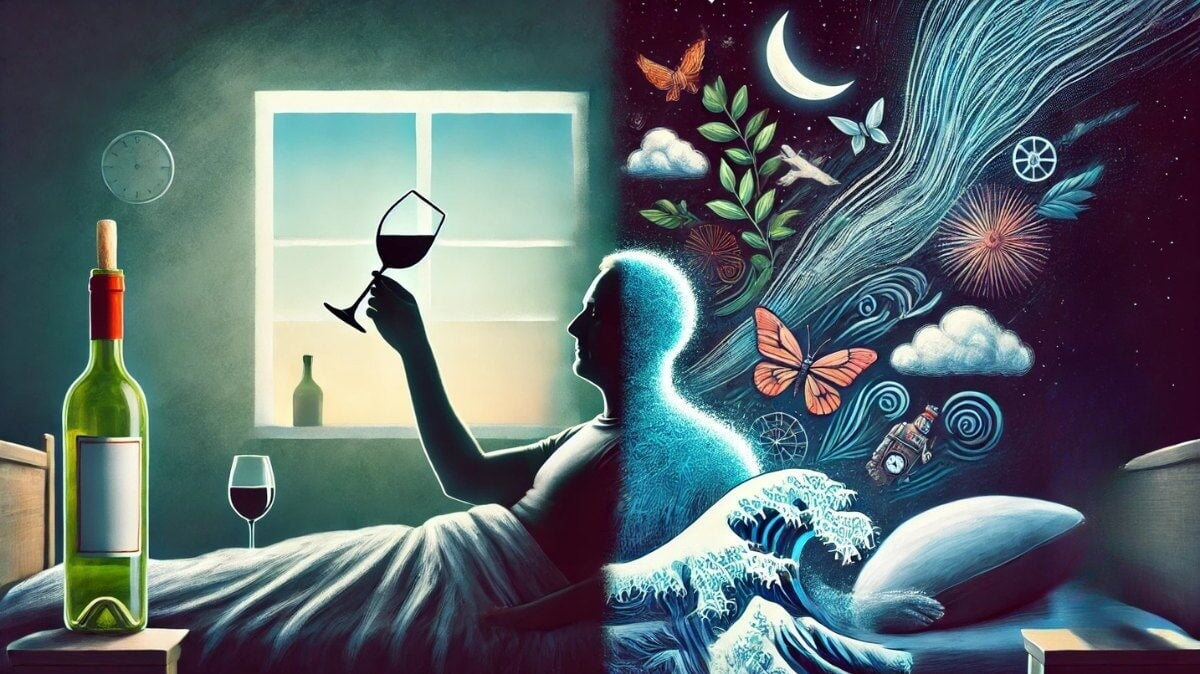
🍻 To the dark side, go you must not (we couldn't find a better way to say: "less alcohol").
...and more water. Alcohol is a false friend that makes falling asleep easier but completely disrupts your sleep.
🚫 The coffee after your nap, you will banish
The power of caffeine, this molecule stays in our body (too) long and influences sleep. For good sleep quality, avoid it well before bedtime.
💑 The disturbances of your partner, you will reduce
To recover better, you have to think of each other by limiting involuntary nighttime interactions. For cat owners, nothing to do, it's already too late; they run the world.
🧘♀️ Anxiety and stress lead to the dark side
With methods that allow for reducing anxiety, sleep is much, much better.
#end of music. Who didn't imitate Master Yoda's voice while reading these tips? <○○>
For even deeper and more restorative sleep: All the solutions

Now that you have mastered the basics, let's go further in terms of performance. Because no, it is not necessarily useful to increase your sleep time because that is called hibernation. An adult generally needs only 7 to 9 hours of sleep on average (for some it's more, for others less).
🧘♀️🧘♂️ Meditation and guided meditation
Try it and you'll adopt it. No need to go to Nepal and shave your head; there is a multitude of ways to meditate, and it is scientifically proven that it works!
You can install a dedicated app (we quite like Headspace here), or simply use YouTube. This requires short use of the mobile phone, but you won't stay in front of the screen (and the blue light); you must put it down once the app is launched.
Guided meditation is accessible to beginners.
What is great is that the effects are physiological: it helps decrease blood pressure, slows the heart rate, and promotes the production of serotonin and melatonin. Everything needed to have deep sleep, and therefore restorative sleep.
So how do you do it?
👉 First, set the stage: Low lighting, cozy atmosphere, good temperature, no outside disturbances, phone in airplane mode. Use comfortable headphones to enter your bubble of calm.
👉 Then prepare yourself. A quick bathroom break, comfortable clothes, bedtime routine, and you lie on or in the bed.
👉 Launch the app and let yourself be guided.
You feel yourself drifting off, that's great! And it is absolutely not a big deal if you are forced to open your eyes to take off the headphones and turn off the app. You have calmed your body and your mind, enjoy the results; now all that's left is to sleep well.
Small trick in case of waking up during the night: a cardiac coherence exercise.
Get into a resting position and refocus on your breathing. Inhale for 5 seconds (counting in your head), then exhale for 5 seconds, gently, completely. Practice this for at least one minute, 3 minutes to feel more relaxed.
There are several variations; you can count 7 seconds... hold your breath for a few seconds... then breathe out. Do this activity according to your needs.
🥱 Self-hypnosis
😵 Your eyelids are heavy... no, that is not exactly what hypnosis is...
We all think of those shows where the subject thinks they are a gorilla on stage; that is indeed a form of hypnotic state, but it is not what we are interested in here.
👉 You know that short moment, just as you are about to fall asleep, very calm, but still a little bit conscious, not quite gone? That's it! A state of drowsiness and a gradual modification of the state of consciousness, to sum it up.
Seeing a hypnotherapist can be useful to fight against stress and anxiety, one of the primary causes of sleep disorders. A few sessions are sometimes enough to regain deep sleep and reap all the benefits. And it is science speaking!
🧘♀️ But you can also practice alone, with a few easy exercises. Because yes, it is possible to reach a hypnotic state on your own, without a "gift" and without knowledge of hypnosis techniques. After a few "self"-sessions, the quality of your sleep should be better.
🎼 Music - Binaural sound
Music has a real influence on us. Try falling asleep after a metal concert, or after a night at a nightclub... It's hard. You might have even already felt that little boost our favorite music gives us when we don't feel well?
A 2006 study demonstrates that music with a high tempo does indeed lead to an increase in heart and respiratory rate!
But we won't go into the realm of science to talk to you about binaural sound, because there aren't enough studies. If we are telling you about it, it's because music will help you relax and soothe you, and that feeling only brings benefits. The binaural sounds you find on the internet are thematic: for concentration, for studying... or for falling asleep.
The hypothesis is that the brain emits waves:
-
delta waves (0.5 to 4 Hz) testify to a state of deep, slow-wave sleep
-
theta waves (4 to 7 Hz) are the waves of deep relaxation while fully awake
-
alpha waves (8 to 13 Hz) are those of light relaxation and calm alertness
-
beta waves (14 Hz and beyond) are those of current activities
-
gamma waves (more than 30 or 35 Hz) testify to intense cerebral activity
🔧 How does it work? Each earbud emits a slightly different sound. In the center, your brain mixes them. The result is a "beat" that is paced to brain waves. Aim for binaural music intended for calm and sleep, with a frequency of 4Hz, which will encourage your brain to synchronize.
So, let yourself be tempted by this solution for quality sleep by choosing the music that will have the most effect on you.
👵🌿 Grandmother's recipes
For all the gamers who chose the "druid" class, all the apprentice wizards of Hogwarts, and even the muggles, here is a small selection.
Chamomile
👉 Chamomile is one of the best-known plants for its sleep-inducing virtues. It has sedative properties and has proven effective in calming the nervous agitation that hinders sleep. It can even be used in weaning off benzodiazepines, a component of sleeping pills!
Our advice for sleeping well: as an infusion or in drops, in the evening an hour before bedtime. You can mix essences between Roman chamomile, Feverfew, or Matricaria.
Valerian
👉 Valerian. We're not talking about your cousin from the North. This plant lowers blood pressure, slows the heart rate, and decreases nervous agitation, anxiety, and the sleep disorders that follow. In short, it promotes falling asleep.
"Valerian decreases the time it takes to fall asleep, increases periods of deep sleep, and reduces nighttime awakenings" (Dr. Laurent Chevallier, Nutrition Department at Montpellier University Hospital).
Our advice for your nervous system: As an infusion in the evening, or why not in the bath: boil 100g of dried roots in 2 liters of water, let it steep for 10 minutes, strain, and pour into the bathwater.
Caution: may be contraindicated for pregnant women, breastfeeding women, or children under 15 years old.
Passionflower
👉 Passionflower, which is not a Pokemon, contains molecules that act against stress and hyperexcitability. This plant is anxiolytic, tranquilizing, and sedative. It is said to have the property of restoring restful sleep by suppressing nervousness and anxiety.
Our advice for a good rest: steep a teaspoon of passionflower blossoms in a cup of boiling water, let infuse for three minutes before consuming.
Eschscholzia
👉 With virtues that limit nighttime awakenings, Eschscholzia (hard to pronounce, also known as the "California poppy"). It is a powerfully anxiolytic plant. It promotes falling asleep, contributes to the reduction of nighttime awakenings, and prolongs sleep time.
Our recommendation against insomnia: steep 1 tablespoon of the dried plant in ¼ liter of boiling water for 5 to 10 minutes.
Hops
👉 Hops. We see you coming, but no, the prescription is not in the form of a fermented bubbly liquid. Hops reduce the time it takes to fall asleep and allow you to drift into a restful sleep. Its medicinal use dates back to the 10th century.
Our tip for deep sleep: Steep 10 to 15g of dried cones in boiling water for 10 minutes.
A little extra?
To each their own; there's no accounting for taste. Perhaps you'll want to add a bit of orange blossom, red berries, verbena, or linden: no problem! Feel free to combine several plants in the same infusion.
🚨 Caution
Do not underestimate the power of these concoctions; consume without excess because the active substances are very real, with a true effect on our body and mood.
👉 Incidentally, as a bonus, other interesting foods for deep and restful sleep: Bananas, mangoes, dates... Kiwis! (according to a study published in the Asia Pacific Journal of Clinical Nutrition, 2 kiwis every night promotes good sleep).
But also any product containing tryptophan: brown rice, dairy products, eggs, meat, fish, nuts, dark chocolate... This molecule participates in the synthesis of serotonin (the happiness hormone) and melatonin (the sleep hormone). Enough to sleep well!
A final word
Does it take you no longer than 30 minutes to fall asleep? Do you wake up at most once in the night, and no more? If you do wake up, do you fall back asleep in less than 20 minutes? But above all, do you feel better?
You've made it! You have improved the quality of your sleep and you know all the techniques for sleeping well.
The next day, remember not to wake up to a blast of Metallica*, for a gentle new day, and all will be well (*Nothing Else Matters accepted).