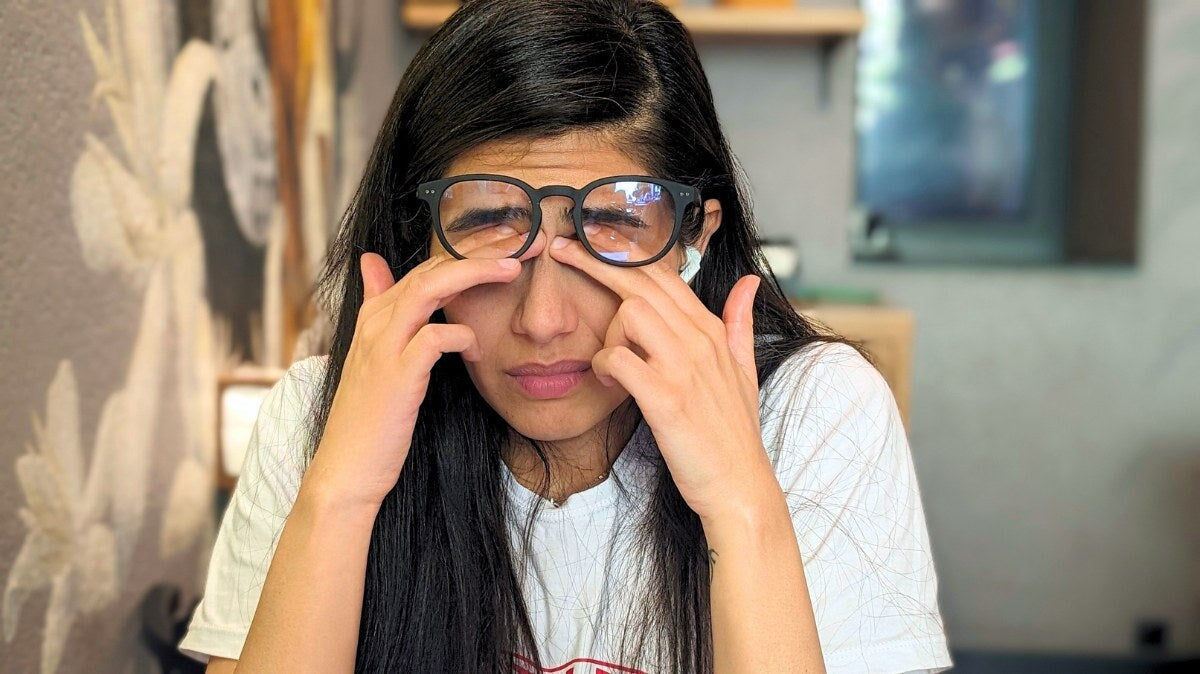


Are you soon going to undergo eye surgery to get rid of your glasses? Did you know that after the procedure, it is recommended to wear sunglasses and protective glasses? We explain why and especially what glasses to wear after eye surgery!
Refractive surgery: what is it?

Well, we figure that if you clicked on this link, you probably have an idea about the subject. But, just to be sure, we'll give you a quick summary.
The term refractive surgery refers to a set of eye surgeries that correct refractive errors: myopia, presbyopia, hyperopia, and astigmatism. The goal: no longer need to wear prescription glasses or contact lenses.

The most widely used method is laser eye surgery (LASIK, PRK or SMILE), which changes the curvature of the cornea depending on the desired correction. Much less invasive and more precise than the surgeries performed a few years ago with corneal incisions, the laser allows for a faster recovery with good healing.
Of course, provided you follow some essential advice in the days following the operation!
Why wear glasses after the procedure?

Even though it is a temporary measure, wearing protective glasses and sunglasses after refractive surgery is essential.
After laser treatment to correct myopia, presbyopia, hyperopia, or astigmatism, you will need to wear protective glasses, prescription glasses, or both, for several reasons:
- Protect your eyes from dust and wind: after surgery, your eyes will naturally be more sensitive and need to be protected day and night. It is a bit inconvenient, of course, but essential for proper healing.
- Reduce light sensitivity: common after surgery, photophobia is an inconvenience that can be limited by wearing sunglasses or glasses with amber lenses.
- Avoid rubbing your eyes (especially at night): one of the most common side effects after this type of surgery is a feeling of eye irritation. You will therefore likely experience tingling and itching, and the challenge will be not to rub your eyes at all! Wearing protective glasses (or just glasses) can also help.
- Protect your eyes from UV rays: you must avoid ultraviolet rays at all costs after laser eye surgery! Indeed, UV rays can slow down healing, cause inflammation, and lead to the formation of scar tissue on the cornea. This is what is known as corneal haze or corneal opacity, causing blurred and hazy vision. Sunglasses are therefore essential for several months outdoors after such an operation.
- Reduce eye strain and exposure to blue light: to avoid eye strain, it is recommended not to overexert your eyes, especially when reading or working on a screen. A pair of anti-blue light glasses is highly recommended when you start exposing yourself to screens again, and even before that.
- Ensure the transition with residual correction: you may not see 100% clearly right after the operation, especially if it is progressive presbyopia after 40. In any case, there will be an adjustment period where your vision will fluctuate, and you may need to compensate for residual over-correction or under-correction. In these cases, your ophthalmologist will prescribe suitable corrective lenses to ensure the transition.
Sunglasses or post-operative glasses?

Well, it can be both. And obviously, the best thing would be to have one pair for everything, depending on the progress of healing.
- Post-operative glasses: during the first few days after surgery, you will probably end up with fairly thick eye protection glasses, sometimes with an adjustable headband to keep them in place at night. Bulky, but not necessarily comfortable! They are designed for recovery after surgery, but you can switch to lighter glasses quickly if you wish.
- Sunglasses: they will be essential outdoors (and even indoors depending on your sensitivity)! Choose a pair of glasses with effective UV protection, ideally category 3. Ideally: a sturdy and lightweight model, made of polycarbonate for example, with polarized or anti-blue light lenses, and an anti-reflective coating.
- Amber-lensed glasses: perfect for reducing eye strain, glare, and exposure to blue light indoors. A good alternative in the evening when you no longer need protection from UV rays.
➡️ To give you a concrete example, a member of the Horus X team recently went through this. And at every post-operative stage, we had a perfectly suited model! The ultimate combo: urban sun during the day + urban amber in the evening, to protect the eyes from the sun, UV rays, glare, or even blue light. And after a few days (or weeks) of proper protection, you can continue with anti-blue light glasses: in our example, the Ushuaïa, perfectly suited to rest the eyes and protect them from external aggressions.
Eye protection: our advice after refractive surgery

Okay, we've seen it, wearing a pair of glasses with a good level of filtration (UV, blue light, bright light...), is the basis during visual recovery in the first few weeks following laser surgery.
But to be complete, we won't forget a few essential steps to take care of your eyes post-op:
- 🙏 Don't overdo it, rest your eyes regularly: after such an operation, you will necessarily have to take it easy.
- 💧 Put eye drops: artificial tears will be essential to take care of your irritated eyes. Instilling eye drops will allow the eye to stay moist and avoid discomfort while promoting healing.
- 🩺 Obviously, see your specialist according to the established consultation schedule or for any questions!
Final word: what pair of glasses after eye surgery?
- Refractive surgery is a laser eye operation aimed at correcting myopia, presbyopia, astigmatism, or hyperopia. This type of surgery, commonly performed, is minimally invasive, fast, and precise.
- However, there are some rules to follow after laser eye surgery to avoid complications: use eye drops to prevent dry eyes, rest your eyes regularly, and especially wear glasses with UV protection and tinted lenses.
- Indeed, eyes after this type of surgery are more sensitive to light. In addition, good UV filtration is always recommended to avoid poor corneal healing.
- Our recommendation: 100% UV protection, anti-blue light, anti-reflective sunglasses to protect your eyes from sunlight. And in the evening, to prolong the protective effect, anti-blue light glasses with amber lenses. If you want to be sure to choose quality at the best price for your little eyes, check out our collections anti-uv sunglasses and amber-lensed glasses.